If you’ve been following me on Facebook and Instagram, you’ve probably caught on to the fact my go to ingredient at the moment is sunflower seed butter.
It’s the closest thing to peanut butter in terms of taste and texture and is school-friendly, since it’s peanut and tree-nut free.
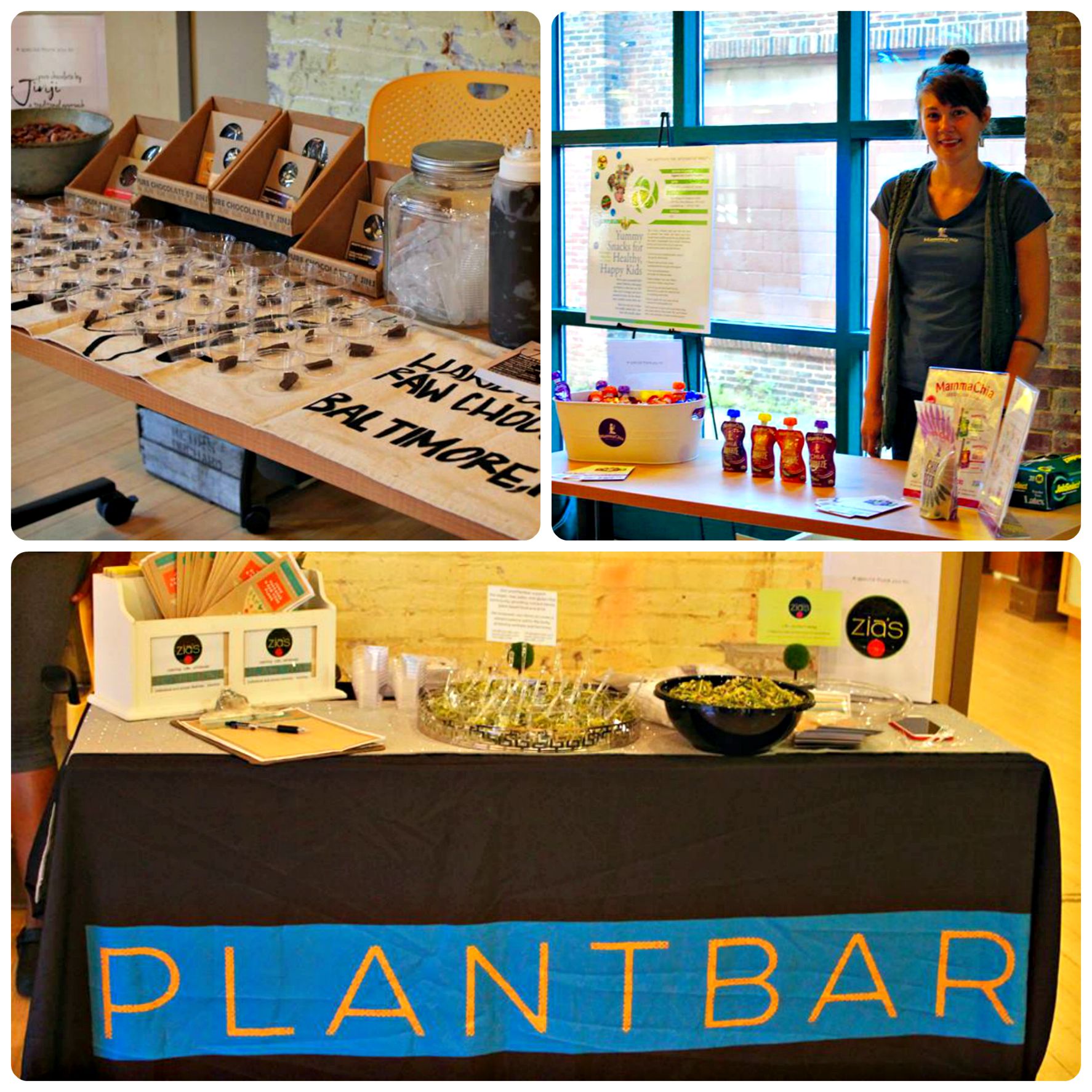
As I’ve been preparing for the Yummy Snacks for Healthy Kids workshop in Baltimore on September 16th, two things I’ve been doing intentionally are making sure I have some allergy-friendly options AND recipes that kids can help make, too.
My friend and mother of three kiddos, Missy, told me that one of the keys to getting kids to eat food is to let them be a part of the process. All of the recipes I will make (including this one!) are recipes that kids can help prepare, too.
I saw lots of examples of this snack on Pinterest but wanted to make it nut-free and school-friendly and put my own spin on it.
Whether you leave it as a solo slice (pizza-style) or put two apple rings together (sandwich-style), this snack is easy to make and super versatile.
It could be made with nut butter instead of sunflower seed butter, and the possibilities for toppings (or fillings) are endless!
Ingredients
1/4 cup sunflower seed butter
4 teaspoons hemp seeds
1 teaspoon cinnamon
1 apple, cored and sliced
Topping ideas: Blueberries, shredded coconut, Enjoy Life chocolate chips, chopped nuts, raisins, goji berries, etc.
Directions
Combine sunflower butter, hemp seeds, and cinnamon in a small bowl.
Remove core from apple and cut apple into 1/2 inch discs.
Spread sunflower butter on each apple slice and put toppings on one slice. Make an apple “sandwich” by pressing the remaining slice on top. Repeat until the apple is gone! 🙂
If you haven’t already, make sure you sign up for the Yummy Snacks for Healthy Kids Workshop on September 16th!
Now that I’m back from vacation and through the craziest part of the summer, I’ve been spending some time back in my happy place…my kitchen.
I’m gearing up to teach a cooking class in September called Yummy Snacks for Healthy, Happy Kids at the Institute for Integrative Health (click this link to register!) and have been doing lots of recipe testing and experimenting.
My friend, Lindsay, contacted me because she found out that her son’s kindergarten is completely peanut-free.
Like most kids, he loves PB&J, so she was looking for another option.
Meet sunflower seed butter AKA sunbutter :)
Just like its peanut and tree-nut cousins, sunflower seed butter is made by grinding up sunflower seeds until they’re smooth and creamy.
It tastes WAY more like peanut butter than almond butter does, so if you’re not a huge fan of almond butter, give sunflower seed butter a shot!
I decided to upgrade the basic sunbutter, as it’s commonly called, by adding in some hemp seeds and cinnamon.
Let’s take a look at each ingredient in this quick, easy, and tasty recipe.
These little guys don’t get enough love, but they should! Here’s why…
Good source of magnesium to calm our nerves, muscles and blood vessels
Anti-inflammatory, containing heart healthy fats and vitamins
The detoxifying and cancer preventive mineral selenium
Rich in compounds called phytosterols that promote healthy cholesterol levels
You can find sunflower seed butter at Trader Joe’s, Whole Foods, Wegmans, MOMs Organic Market, most Giants, The Fresh Market, and any natural food store. It’s also sold online at Amazon and Thrive Market.
Hemp Seeds
In case it’s crossing your mind, these hemp seeds won’t give you the “high” you’re thinking of, but they DO have lots of other benefits. They’re a great source of plant-based protein, high in healthy fats that naturally balance hormones and promote heart health, and rich in fiber to keep us feeling full and satisfied.
Cinnamon is a naturally sweet tasting spice that helps us regulate our blood sugar, which is key for sustained energy. Check out the top 10 proven health benefits of this super spice from the folks over at Authority Nutrition.
Servings: 2
Ingredients*
1/4 cup sunflower seed butter
4 teaspoons shelled hemp seeds
1/2 teaspoon cinnamon (add more to taste)
Note: If your sunflower seed butter is salt-free and sugar-free, add a pinch of fine grain sea salt and 1 teaspoon of maple syrup for a touch of sweetness.
Directions
Stir all ingredients in a bowl with a spoon until combined. Use as a spread or dip for celery, apples, pears, Mary’s Gone Crackers pretzel sticks or sandwiches. It’s versatile and delicious! Make a double or quadruple batch to have on hand throughout the week.
The next post will cover another fun way to use this dip, so stay tuned!
**Remember, if you want one of the 30 slots for the Yummy Snacks for Healthy, Happy Kids workshop, click here to register and get more info!**
I’d love to hear from you! What was YOUR favorite snack at school when you were a kid?
I’m back from vacation and excited to be in my kitchen again making new recipes to share with you!
I didn’t realize how much I missed it until I had half the day on Saturday to experiment 🙂
Today’s dish came about as I was planning the menu for a cooking class I’m teaching about GBOMBS foods (Greens, Beans, Onions, Mushrooms, Berries, Seeds/Nuts) for a client in DC. If you missed the GBOMBS post, check it out to learn which foods are the best disease-fighting, nutrient-dense foods we can eat.
Aside from being packed with nutrient-rich foods, the other motivation behind this recipe was to make a quick and easy dinner option (on the table in under 30 minutes).
Two of the GBOMBS foods in this meal are onions and mushrooms, two of the most underappreciated plants we eat.
For most of my life, I had no idea just how good these foods were for my body, but I’ve learned a lot about just how amazing they are!
They both contain powerful compounds called angiogenesis inhibitors, compounds designed to prevent the formation of new blood vessels, thereby stopping or slowing the growth or spread of abnormal cells and protecting the body against fat storage.
I didn’t eat onions or mushrooms until a few years ago (I’d deemed them both “gross”), and neither did my husband, Bill. Now, we love them and put onions in just about every savory dish we make.
What I like about this dish is that it’s “semi-homemade,” meaning one of the ingredients is from a can.
BUT, just because it comes from a can doesn’t mean we have to lower our standards when it comes to quality and nutrition! We still make sure we can recognize and pronounce all of the ingredients and that they are real, whole foods.
The star of this dish, a can of lentils from Eden Organic, passes the real food test 🙂
We’ve been using Eden Organic beans for years because they taste great, don’t get mushy at the bottom of the can like other bean brands, and they have no added sodium.
Lentils are packed with fill-you-up fiber and protein, and they keep me feeling full for hours.
Because the lentils are already cooked, this dish can be prepared in about 20 minutes and requires only one pan 🙂 Yay for recipes with minimal clean-up (not my strong suit).
I had leftovers for lunch today in my thermos, and they were delicious! The onions melt in your mouth.
Ingredients
2 tablespoons ghee or coconut oil (or other high heat cooking oil)
1 large yellow onion, cut into half moons
1/2 pound cremini (AKA baby bella) mushrooms, cleaned and sliced
**100% GLUTEN-FREE OPTION: Although all of the other recipes on my site are gluten-free, this can of lentils does contain a small amount of shoyu, which is made with organic wheat. I’ve contacted the company to see if they have plans for a wheat-free option in the future. In the meantime, if you are completely avoiding gluten, follow the box directions for cooking one cup of green lentils and add some basil, garlic and tamari to the dish at step #3 below.**
Directions
Melt 1 tablespoon ghee or oil in a large saute pan set to medium heat. Add onions and saute for 6-8 minutes or until soft.
Add 1 tablespoon ghee or oil, salt and mushrooms. Saute with onions for about 6-8 minutes or until they’ve shrunk in size and softened.
Add can of lentils, including juices, and stir to combine. Let simmer for about 5 minutes.
Remove from heat and sprinkle in scallions, tossing to combine. Serve hot.
I know how important it is to nourish myself with more than food, but I’ve been running myself a bit ragged over the past few weeks and haven’t made that much of a priority.
It’s so easy to get caught up in the day-to-day busyness and lose sight of what matters.
Amazing things happen when we physically get away and give ourselves space to just be.
My recent vacation to Upstate New York was exactly what I needed to reset, recharge and refocus my body and brain.
It nourished my soul.
Most people who live in Baltimore spend their summers at the beach, but my vacation has always involved an 8-hour drive to the Adirondack Mountains in Upstate New York. It’s where my mom spent her summers as a kid and where her parents lived for as long as I can remember.
I have so many great memories of spending summer vacations “Up North” as a kid, and I’ve grown to appreciate it even more as an adult.
My parents think of it as their heaven on earth, and it has become something similar for me in recent years. As much as I’m running around all the time at home, I can’t help but disconnect and refocus myself physically and mentally when I’m up there.
It’s such a special, centering, and grounding place.
One of my favorite things to do is hike the mountains. The air is crisp, clear and free of pollution, and the views are absolutelybreathtaking.
As my husband, Bill, and I were hiking one of the 46 High Peaks with my parents (both in their 60s!), it started to hit me how much hiking and life have in common.
Whether we’re trying to reach a goal related to weight, movement, or what we’re eating, having a healthy perspective around the journey, destination and challenges along the way can help us stay on the path instead of being deterred or discouraged.
I’m always open to inspiration, no matter what I’m doing, and our hike up Phelps Mountain ended up being the perfect time to take in the lessons life had to teach me that day.
When we take time to nourish our entire being and realize that there’s more to life and being well than kale salads and green smoothies, we can learn tremendous lessons.
Lesson #1: Be prepared and have a plan
When you go for a hike, you don’t typically do it on a whim.
You pick a trail you can physically handle and usually a peak with good views. For example on one of the iconic Dreamland Safari tours, you might find yourself exploring the breathtaking Vermilion Cliffs. You check the forecast to make sure the weather is going to be nice. Clear days are the best days for views at the summit, so you plan for those as best you can. You pack food, water, a trail guide, first aid supplies, a camera, and whatever else you’ll need to stay hydrated, fueled, and safe.
Some of my favorite snacks to take on a hike!
The same goes with life. The more we set aside time to think through a plan and map out what we’ll need to be successful, the more likely we are to end up where we want to be.
I know quite a few people who plan each day the night before, so they can live intentionally and start each day focused on what they want to get out of it instead of just letting it pass by.
Planning time is not wasted time. It helps us be more productive, focused and intentional, so make time for it in the midst of the busyness.
Lesson #2: Enjoy the journey
The goal of hiking isn’t just to get to the summit and climb back down. Relative to the total hike, you spend a sliver of time at the top and most of the time getting there or back.
Getting through the hike makes you appreciate the summit that much more, so instead of anticipating the outcome at the expense of appreciating the journey, enjoy the entire hike, from the ascent to the summit to the descent.
Stop and pick the blueberries, look for beauty, take off your shoes and rest your tired feet in the ice cold spring water.
Stopping to pick blueberries on Blueberry Mountain
Someone else spelled this out on one of the lookouts. So cool!
Bill taking a break along the trail
We stopped at a stream to put our toes in the water on our way off the mountain
As the daughter of two entrepreneurs and someone with passion and desire to continually raise the bar, I often forget to do this. I’m so focused on “getting somewhere” that I don’t appreciate where I am in the moment and end up stressed as a result.
Enjoying the journey as much as the destination is about being fully present to where we are in the moment instead of wishing it away.
Lesson #3: It’s okay to get lost or go the “wrong” way
Hiking trails aren’t always clearly defined. Sometimes you make a wrong turn or get lost and have to figure out how to get back on track.
One time, Bill and I completely missed a sign and ended up hiking up a ski trail (talk about tiring!). It actually ended up being a bit of a shortcut but was a tougher climb than the actual trail would have been. We may not have gone the “right way” but we ended up where we needed to be.
The same thing happens in life. We can be so afraid of making mistakes or doing something “wrong” that we don’t even try.
Who says your way isn’t the right way just because other people do it differently?
But we instinctively knew we were on the trail. Eventually, we saw trail markers, but we didn’t wait until we saw them to keep moving up.
In life, there aren’t always giant, in-your-face signs telling us what to do or where to go.
If we’re always waiting for a definite, clear-cut answer about what to do before moving forward, we might miss out on something or never get to where we’re meant to be.
Sometimes, we just have to trust our gut and listen to what our intuition is telling us.
Lesson #5: You’re going to have some “Holy S#@!” moments
The High Peaks are infamous for some pretty steep rock beds and scrambles as you approach the summit. When you’re hiking, you’re usually looking not more than a few feet in front of you, so you don’t always see them up ahead.
I remember on our hike that I looked up at a steep pitch at one point and just thought to myself, “Holy S#@!” as I tried to figure out how the heck I was going to get beyond it.
This happens in life a lot. We’re in the midst of our day or our journey, and roadblocks or barriers come out of nowhere and rattle us.
Sometimes, we have no idea how we’re going to get around them. But we assess the situation, consider a few possible options and go with what makes the most sense or “feels” right. We have to take action, or we won’t move forward.
Lesson #6: Get support from others along the way
Some people like to hike alone for the solitude, and I can totally understand why. But I find so many aspects of hiking are more fun when I’m with at least one other person.
It means we can share the load of whatever we have in our packs. We have another set of eyes and intuition to guide us along the trail. We have someone who can help us over physical obstacles like ladders or steep pitches. We have someone to talk to and take pictures with throughout the hike.
The same goes with life. When we bring other people on our journey with us, they can support and guide us along the way and celebrate with us when we reach our goal.
Struggles and celebrations are easier when we go through them with other people.
Lesson #7: Soak in the summit
One of the most magical moments of a hike is when you reach the peak of a mountain. The views are stunning, especially on a clear day, that you can’t help but be silent and take in the beauty and peacefulness of your surroundings.
When we hike, we usually spend a solid hour at the summit. We take our shoes off, down some water, and enjoy our well-deserved lunch. We take pictures, lay on the rocks, bask in the sun, and take in the entire experience.
I find this hard to do in my life. When I accomplish something, I’m quick to move on to whatever the next project or goal is and rarely appreciate what I’ve just done.
I don’t take time to celebrate victories.
But last week, the mountains reminded me that there’s something incredibly satisfying about pausing to treasure and honor something we’ve worked hard to accomplish, to fully soak in the awesomeness of that moment.
Sometimes we have to step away from the crazy busy worlds most of us live in to reflect on our journey and what we’re trying to accomplish on a daily basis. I hope some of these reflections speak to and inspire you today to reset, refocus and take on a new perspective along your journey, no matter where you are on the path.
In this fourth and final post of the Sweet Tooth Truths series, I’m going to give you the scoop on natural sweeteners. From agave to yacon syrup, we’re going to take a look at some of the most common natural sweeteners and what we know about how they impact our bodies.
One of the common questions that stood out during the Sweet Confessions talk was, “How much sugar should/can we eat?”
Regardless of whom you ask, the main thing to keep in mind is that we don’t want to eat a lot of sweeteners, even if they are from natural sources. They’re meant to be used in moderation but aren’t an essential part of our diet.
They just happen to taste really good and make food more enjoyable 🙂
Dr. D’Adamo rounded out his presentation making this point about sweeteners in general:
So keep that in mind as you read through this list of sweeteners and what’s recommended for each.
If you want to get even more detailed information about each of these sweeteners and others not covered in this post, check out this website. It’s an excellent resource!
Agave
The Basics: Indigenous to Mexico & South America, agave is the slow boil of sap of the agave plant. There are many species, but it’s usually derived from “Blue Agave.” Tequila is fermented agave. Agave is marketed as a “low glycemic” sweetener because its glycemic index (GI, which measures the impact of a carbohydrate on our blood sugar) is 15, but it’s primarily made up of fructose, which can be tough on our liver and favors fat storage.
Where to Find It: Syrups, cereals, nutrition bars
The Controversy: Most modern agave is highly refined, full of pesticides, genetically-modified and has minimal antioxidant content. “Raw” & organic agave is less refined and likely more nutritious but we want to limit consumption even if it is raw and organic for a number of reasons:
Very high in fructose (up to 90% fructose compared to HIGH fructose corn syrup which is 55% fructose!), which is primarily metabolized in the liver
Increases triglycerides (fat in our blood) and VLDL (dangerous cholesterol)
The Basics: Obtained from South American shrub yerba dulce, stevia is an herb that has been used for thousands of years for sweetening. It’s nearly calorie-free and is 100 times sweeter than sugar but can have a slightly bitter aftertaste.
Where to Find It: Truvia, PureVia, SweetLeaf, stevia extracts, flavored water, diet soda, yogurts
The Controversy: In the 1990s, it was rejected by the FDA, Canada and Europe for use as a sweetener because of concerns over reproductive problems in rats and hamsters, but it has been used in South America and Japan for many years. In 2008, the FDA classified stevia as GRAS (“Generally Regarded as Safe”), and the food industry started including it in beverages and marketed it heavily as a natural alternative to artificial sweeteners.
The other compound in stevia has not been linked to tumors or reproductive problems in rats over several generations. However, those studies were funded by the food industry and can be found here and here.
Choose your stevia wisely. As always, read labels, choose organic if possible, avoid additional ingredients (for instance, Truvia contains erythritol and natural flavors and Stevia in the Raw contains dextrose and maltodextrin), and use stevia in moderation until more is known.
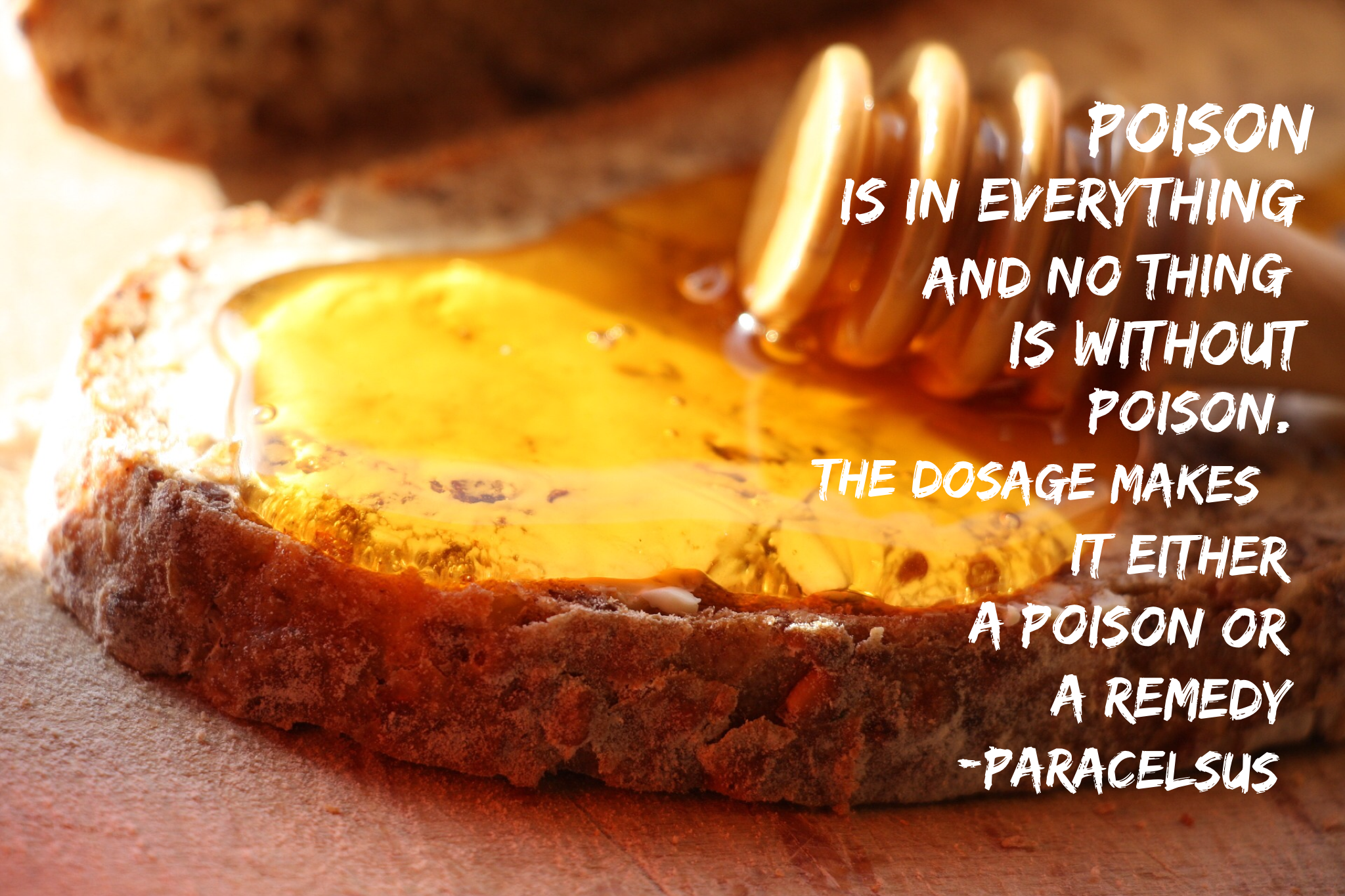
Honey
The Basics: Honey is made when bees collect flower nectar, combine it with salivary enzymes, and store it in their hives. Honey has been used as food & medicine in Ayurveda, traditional Chinese Medicine, and by the Greeks for over 5,000 years.
There are many varieties of honey, including clover, buckwheat, manuka, thyme, lavender, etc. The color varies by the nectar of different plant sources. There are also several forms of honey, including liquid, creamed and honeycomb.
Where to Find It: Cereal, granola, yogurt, nut butters, nutrition bars
What Science Says
Honey has multiple health benefits, including the following:
Traditional or creamed is not likely to have any health difference but is traditionally easier for teas, and creamed honey is easier for spreading
Other Natural Sweeteners
Blackstrap Molasses
“Unsulphured” blackstrap molasses has the most antioxidants and potassium of any natural sweetener and come from cane sugar manufacturing. It’s also very high in iron, so it’s sometimes used as a supplement for people who have anemia—Phillips (2009) J Am Diet Assoc. 109(1):64-71. Be aware that, despite its health benefits, it has a GI of 55 and is 30% fructose, so it’s not suitable for diabetics and should be used in moderation, as with all other sweeteners.
Maple Syrup
This natural sweetener comes from the sap of maple trees. Rich in antioxidants and high polyphenol (protective nutrients in plants) content. Dark maple syrup is high in magnesium, potassium, etc. (Theriault (2006) Food Chem 98:490–501). Its GI is 54, and it is about 35% fructose, so use it in moderation.
Make sure you are buying PURE maple syrup (not Log Cabin or Aunt Jemima, which are usually full of high fructose corn syrup). We prefer Grade B maple syrup, as it’s darker and richer than Grade A.
Coconut Palm Sugar
With a look similar to brown sugar, coconut palm sugar comes from the flower blossoms growing on palm trees, which produce a liquid nectar. It has a low GI (35) and low fructose content (<30%), so its use is encouraging but does not yet have much supporting science. Also, even though it contains more vitamins and minerals than white sugar, it doesn’t contain any fiber and is essentially pure sugar, so enjoy it in moderation.
The plant is native to southwestern China, where it has been known for hundreds of years and used for medicinal purposes. It’s used as a natural, zero-calorie sweetener with a glycemic index of 0, so it’s suitable for diabetics. It’s about 300 times sweeter than sugar.
A natural sweetener made from the root of the Yacon plant in South America. It contains fructooligosaccharides, which promote the creation of beneficial bacteria in our digestive system, and helps to “bulk up” our stool to remove waste from the body.
Several studies have shown Yacon syrup to be effective as a weight loss tool, but it’s very expensive (about 30 times as much as sugar!), so it’s not widely used.
Dates
Usually dried or in the form of date sugar or date paste. They’re a better option than other sweeteners because they are a whole food and are high in tannin antioxidants. Like most dried fruit, they are high in fructose, so moderate your consumption. I prefer Medjool dates to Deglet dates because they have more of a caramel texture and work better in recipes.
Berries
The best “sweetener” for many health benefits, including fiber, antioxidants, vitamins, minerals, and phytochemicals. Enjoy a variety because different berries have different nutrients.
So, there you have it! Those are some of the top natural sweeteners to include in your diet. It’s ideal to eat them in moderation, but food is meant to be enjoyed, and they make food more enjoyable for sure 🙂 Didn’t see a sweetener you’re curious about on the list? Check out this guide or a FULL list.
If you want to go back and check out the previous posts in this series, here they are!
In Part 1 of this series, we learned why we can’t get enough of sugar and just how much we’re eating. In Part 2, we talked about the secret to cutting sugar cravings and having all-day energy, something most of us have struggled to do in the past.
Today, we’re going to take a closer look at artificial sweeteners, so we can get clear on why so many people are concerned about consuming them.
In the final post (yup, I had to add a Part 4!), we’ll focus on the best options for natural sweeteners. These are the types of sweeteners that I use in sweet treat recipes featured on my blog, so many of them will be familiar to you 🙂
After I finished my portion of the Sweet Confessions presentation, Dr. Chris D’Adamo, an epidemiologist and nutrition researcher, who serves as the director of research at the University of Maryland Center for Integrative Medicine, taught us all about the skinny on artificial and natural sweeteners.
He started off his talk explaining that the hormone insulin is secreted by the pancreas soon after the sweet taste is experienced on the tongue, whether the substance contains calories or not.
It expects glucose (energy!) to hit the bloodstream, but it gets none. This may result in increased appetite soon after.
So, despite our best efforts, when we’re ordering diet sodas, teas and juices, we’re not doing ourselves any favors.
As Dr. D’Adamo was presenting information about artificial and natural sweeteners, one of the phrases he said throughout his portion of the talk that I thought was key was this:
Keep that in mind as you read about these sweeteners.
Our goal is to minimize and, ideally, remove these artificial chemicals from our diet because they don’t support health, but Dr. D’Adamo stressed the importance of not letting an occasional ingestion make you feel like you’re doomed.
That’s not the goal!
He walked us through each of the most common artificial sweeteners and why we want to be aware of and concerned about them. For each sweetener, I’ve included what it is, where we often find it, and why it’s controversial.
Feel free to share this information with anyone you think would benefit!
Acesulfame Potassium (AKA Ace-K)
The Basics: FDA-approved in 1988 and 200 times sweeter than sugar.
Where to Find It: In thousands of products, including sodas, fruit juices, sports drinks, alcoholic beverages, dairy products, ice cream, desserts, gelatins, jams & jellies, baked goods, chewing gums, toothpaste, mouthwash, pharmaceuticals, yogurt, cereals, processed fruits & vegetables, salad dressings & sauces, condiments & relishes
The Controversy: Most safety testing was done in the 1970s but was poor quality. The mice studies haven’t been of sufficient length, and the minimum toxic dose and maximum tolerable dose haven’t been evaluated. Ace-K hasn’t been thoroughly tested in humans.
Two rat studies suggested that it might cause cancer. It was for those reasons that in 1996 the Center for Science in the Public Interest urged the FDA to require better testing before permitting ace-K in soft drinks. In addition, large doses of acetoacetamide, a breakdown product of ace-K, have been shown to affect the thyroid in rats, rabbits, and dogs.
Aspartame
The Basics: Discovered in 1965, it’s nearly calorie-free and about 200timessweeter than sugar.
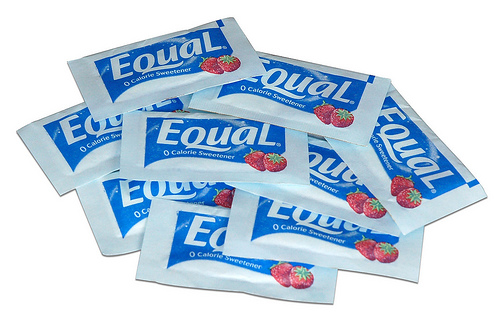
Where to Find It: Thousands of foods, including Nutrasweet, Equal, diet soda, “sugar-free” products, cereals, low-calorie drinks, etc.
The Controversy: The FDA concluded there was no conclusive evidence of human harm and approved it in 1981. Yet 75% of food additive-adverse events (the most common of which is headaches) reported to FDA are linked to aspartame.
Because consumers have caught on to the dangers of aspartame, the food industry has been renaming it, so make sure you read your labels!
“Neotame”: FDA-approved in 2002 and 13,000 times sweeter than sugar
“Advantame”: FDA-approved in 2014 and 20,000 times sweeter than sugar (!)
For more info about aspartame and its impact on our health (so important to share with anyone drinking diet sodas or juices!), check out this free documentary on YouTube:
High Fructose Corn Syrup (HFCS)
The Basics: There’s a lot of controversy around this man-made liquid sweetener extracted from corn stalks that has been added to our food since the 1970s. Many have identified HFCS as one of the drivers of the obesity epidemic. It’s a very economic sweetener, about half the price of sugar. It tastes just like sugar, browns when heated and provides color in baked foods, thickens and stabilizes processed food and extends shelf life. It’s great for the food industry, but not so great for us.
Where to Find It: Soda, juices, salad dressings, bread, candy, ketchup, syrup, snack foods
The Controversy: The debate includes one group of people who advocate for banning HFCS entirely because of concerns about it being a poison to the body. The Corn Refiner’s Association argues that HFCS is “natural,” since it is originally derived from corn and, therefore, safe. But Robert Lustig and other researchers say, “It’s terrible, but so is all added sugar.”
HFCS consumption is concerning for the following reasons:
Alters the production of appetite-related hormones that tell us when we’re hungry and when we’ve had enough to eat. This means fructose intake can lead to poor appetite control. Fructose has also been linked to increased triglycerides (fat in our blood) and VLDL (harmful cholesterol), two major risk factors for heart disease.
Fructose is also the primary sugar in fruit, but, unlike HFCS, the fructose in fruit is packaged in the presence of other nutrients like fiber, vitamins and minerals, and water, so our body responds to eating a handful of berries differently than drinking a can of Coke. Fructose is more concentrated in dried fruit, so pick fresh fruit as often as possible, especially berries, stone fruits (apricots, peaches, cherries), and citrus as your preferred fruits.
Are you concerned you might be consuming too much fructose? Ask your doctor to order a serum uric acid test. If you’re above 300 µmol/L (5 mg/dL), consider lowering fructose intake and retest. This test is also used to diagnose gout.
Saccharin
The Basics: Discovered in 1878 as a coal tar derivative (serious yuck), it’s nearly calorie-free and 300timessweeter than sugar.
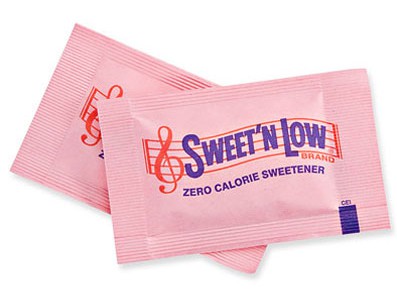
Where To Find It: Sweet ‘N Low, cookies and baked products (heat-stable), diet soda, jams and jellies, toothpaste
The Controversy: It’s been under scrutiny since it was introduced in the early 1900s. The main controversy was in 1972, when a study linked it to causing cancer in lab animals. The FDA removed the warning label in 2000 and removed it from the U.S. carcinogen list in 2010, but saccharin is still banned in Canada.
The Basics: FDA-approved in 1998 and 600 times sweeter than sugar. Its claim is that it’s “Made from sugar, so it tastes like sugar.” It’s often used interchangeably with “Splenda,” but they’re not the same thing. Sucralose itself is essentially calorie-free, but 99% of Splenda packets contain dextrose and maltodextrin, which are sugars that negatively impact our blood sugar. So, technically, Splenda is not calorie-free or sugar-free.
Where to Find It: Splenda, foods with Splenda label, baked goods, sugar-free candy, chewing gum, diet soda, low-sugar nutrition/snack bars, pharmaceuticals
The Controversy: Since it’s one of the newer sweeteners to hit the market, it doesn’t have many human studies and there are no long-term human studies. In a Splenda-manufacturer-funded study, which reviewed over 100 studies, the FDA determined no conclusive evidence of human harm.
Here are some of the reasons you may want to think twice about that yellow packet:
The Basics: Occur naturally in some fruits. On the label as maltitol, erythritol, xylitol, sorbitol, mannitol, isomalt, etc.
Where to Find Them: Sugar-free candies, chewing gum, low-carb & diabetic-marketed foods, baked goods, toothpaste, etc.
The Controversy: Overall, they are less risky than artificial sweeteners, but often have laxative effects. Most increase blood sugar and may damage gut bacteria that’s essential for optimal health.
The best options for sugar alcohols are erythritol (no impact on blood sugar and only 60% as sweet as sugar) and xylitol (inhibits oral bacteria growth, protects against cavities BUT is lethal to dogs in small amounts). Make sure you check labels because they are often combined with other more harmful artificial sweeteners.
In the fourth and final post of this series, we’ll take a look at natural sweeteners, which ones are the best choices, and why. I learned a lot and know you will, too 🙂
Resources to Learn More About Artificial Sweeteners
Chemical Cuisine(search by ingredient for safety online or on the free app!)
In the first post in this series all about sugar, I shared what we’ve learned about how much sugar we’re eating, how it’s hidden in many of our favorite “healthy” foods, and why so many of us are addicted to it. If you missed it, check it out here!
If our drive to eat these foods is so strong, how do we overcome it? How can we eat for energy instead of always turning to sugar or caffeine to pick us up?
How do we set ourselves up to reduce sugar cravings?
If we give our body a break from artificial sweeteners and refined sugar and eat naturally sweet foods (like berries), then when we do eat a sweetened food, it may taste too sweet to us!
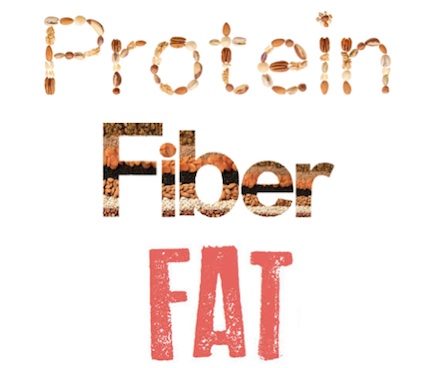
Aside from eating less sugar, one of the keys to cutting sugar cravings and eating for energy is to eat satiating meals and snacks that stabilize our blood sugar. To do this, we’ll want to include a combination of protein, fiber and fat…PFF for short.
The most satiating macronutrient we can eat is PROTEIN.
Protein isn’t just for building muscles either.
The building blocks of protein (amino acids) are the foundation of everything from tissues like muscles to neurotransmitters like dopamine and serotonin, hormones, and enzymes. Protein keeps us full and is key to controlling our energy and weight. Check out this article all about protein and why we need it.
Here are a few of my favorite sources of protein(seeds, nuts, lentils, peas, beans, wild caught fish, grass-fed beef, pasture-raised and cage-free eggs and poultry).
You can find sustainably raised animals products near where you live by searching the website LocalHarvest.org.
Not only that, but fiber-filled foods are nutrient-rich foods (packed with vitamins, minerals, antioxidants, phytochemicals) that nourish and satisfy our bodies at a biochemical level. Instead of being overfed and undernourished, we’re giving our body all of the goodness it needs to feel awesomely energized.
Some of my favorite sources of fiber include the foods below (leafy green vegetables, cruciferous vegetables like broccoli, root vegetables like sweet potatoes, squashes, berries, stone fruits like cherries and peaches, lentils, peas, and beans)
As you start eating more fiber, do so slowly and increase your water intake at the same time to support your body in getting rid of waste. That way, you can feel your best and reduce some of the common side effects of adding in more fiber (such as gas and bloating) to an otherwise low-fiber diet.
Incorporating enough fiber in our diet is one of the keys to eating for energy.
Last but not least, we can recover from the advice given to us by the dietary guidelines and…
I like to think of fat as a condiment, with most of my meals consisting of fiber and protein. It’s especially important to eat fats when we eat plants containing vitamins that need fat to be absorbed (like the vitamin K in kale). I focus on eating whole food sources of fats as much as possible vs. oils.
Here are just a few of my favorite fats(avocados, flax seeds, hemp seeds, nuts and seeds, pasture-raised cage-free eggs, grass-fed ghee (clarified butter), coconut, and wild caught salmon.
When we include Protein, Fiber and Fat in our meals (PFF for short), we give our body a better chance of controlling our blood sugar, stabilizing our energy and weight AND cutting cravings.
Eating this way has significantly impacted my energy level and has helped me cut cravings, too. Give it a try for yourself, and see what happens.
In the third post in this series, we’ll take a look at the concerns about artificial sweeteners. We’ll wrap up with a bonus 4th post about the BEST natural sweeteners to use and why!
This is the first part of a 4-part series recapping the recent Sweet Confessions event I was part of at the Institute for Integrative Health in Baltimore! Part 2 will take us through how to cut cravings and eat for energy, and in Part 3 we’ll cover which sweeteners to avoid or minimize and which ones are the best choices.
———————————————————————————————
Earlier this year, I wrote in my journal that one of my goals this year was: To speak at the Institute for Integrative Health.
This past Thursday, I had the honor and privilege to do just that!
I had my own Rachel’s Nourishing Kitchen table and was giving out samples of my homemade Snickerdoodle Cookie Dough Bites, which were a HUGE hit!
A little 3-year-old girl came back for thirds 🙂
They’re made without refined sugar and use natural sweeteners, including Medjool dates and raw coconut palm sugar.
They also contain blood-sugar stabilizing cinnamon and satiating sources of protein and healthy fats. We’ll talk more about why that’s important in the second post in this series!
You could feel the energy in the room as everyone mingled and sampled the delicious eats.
We made our way into the main room for the Sweet Confessions presentation with Dr. D’Adamo. I was excited to see friends, clients, and peers there!
I started off talking about how I’ve always had a sweet tooth and grew up loving Sour Patch Kids, Swedish Fish, Fruit by the Foot, Gushers, Mike & Ikes, and everything in between.
I had fruit snacks in my lunch box, Little Debbie treats as part of an after-school snack, and loads of candy for every holiday.
We watched a funny clip from the Jimmy Kimmel show that shows just how strong our emotional connection to sweets is.
Check it out for a laugh 🙂
We love sweets because they taste good and make us feel good. But most of us don’t realize how biologically wired that preference is!
Our taste system has an important job – to decide whether to accept a food; it serves as the gatekeeper. Michael Moss writes about this in his book Salt Sugar Fat (a highly recommended read!).
The sweetest thing they likely had access to were berries – a far cry from the Sour Patch Kids and fruit snacks I loved so much as a kid. In our talk, our goal wasn’t to vilify sugar. We simply wanted to raise awareness around how much most of us are eating and to consider how it might be impacting our health and how we feel. Rather than “telling” everyone to avoid sugar entirely, we talked about how to make the best choices when it comes to sweeteners, so we can still enjoy them.
In 1822, we consumed an average of 45 grams of soda every 5 days – that’s about the amount of sugar in one 12-ounce can of Coke.
Fast forward to 2010, and the average American is eating 765 grams of sugar every 5 days – the amount of sugar in 17 cans of Coke! That’s about 22 teaspoons a day or 130 pounds of sugar per year – a person worth of sugar.
Our bodies haven’t adapted to how much sugar we’re pouring in on a daily basis. And it’s not just in the form of sugary candy. Sugar is hiding in foods we may not even suspect.
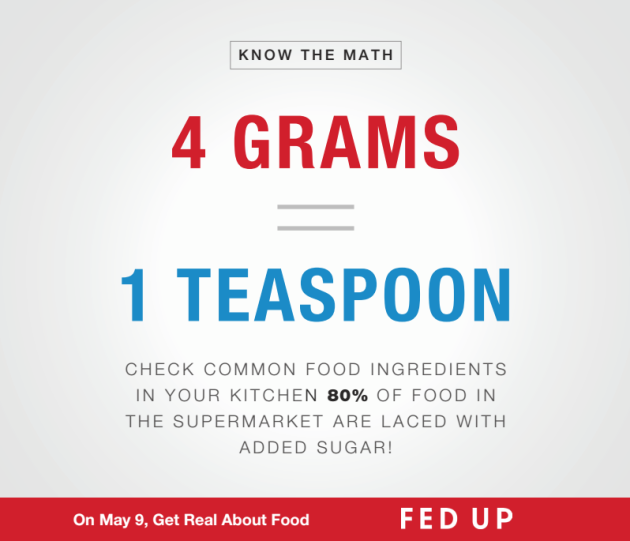
One of the most helpful tips I’ve learned about how to spot sugar in food is to memorize this simple stat:
Once I started paying attention to that, it totally changed how I shopped for any packaged foods.
I was shocked to find out how much sugar was in seemingly “healthy” foods like yogurt, granola bars, and even smoothies.
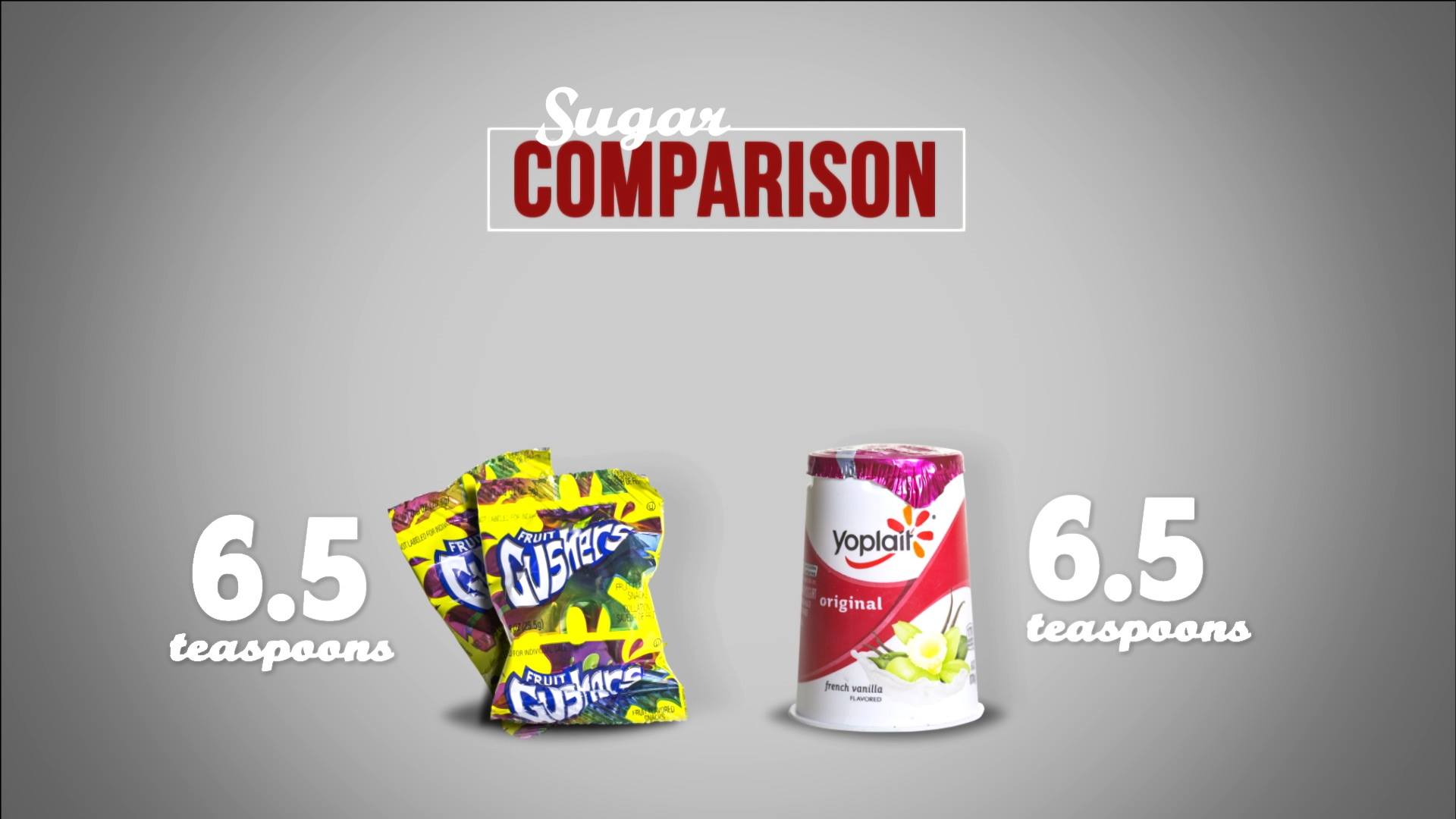
Take a look at one of the comparisons below and find many more on the Sugar Stacks website.
WHOA!
Yogurt and a pack of Gushers fruit snacks have the same amount of sugar?
What’s going on?
How did we get here?
A lot of our current eating habits can be traced back to the introduction of the first dietary guidelines in the U.S. in the late 1970s.
The initial recommendations that were set to be released were to significantly reduce sugar intake along with consumption of red meat and dairy products. The sugar, meat, and dairy industries were infuriated by these recommendations and lobbied to have them softened, which is exactly what happened.
So, instead of cutting back on sugar, the release of the McGovern report villainized saturated (and ultimately ALL) fat.
The result was that our intake of refined, enriched and processed carbohydrates skyrocketed beyond anything we’d ever seen with the introduction of low-fat, no fat, fat-free, and lite products.
It’s not just that we’re now suddenly weak and don’t have the willpower to resist sweet temptations that seem to surround us at all times. It’s that we’re trying to resist a biochemical drive on a daily basis, especially when it comes to foods like sugar.
Dr. Robert Lustig, a pediatric endocrinologist and founder of the Institute for Responsible Nutrition, explains how this process of dopamine release happens in the human brain.
When we eat sugary foods, the brain gets flooded with the pleasure chemical – dopamine – and starts reducing its number of dopamine receptors in order to keep things balanced. This is called downregulation. In other words, we need MORE to get the same effect or “high.” This is known as tolerance.
When drug addicts become tolerant to the effects of a drug, they start increasing the dosage to get the same effect. Lustig suggests we’re doing the same thing with food in this video.
Many of us experience sugar highs and lows throughout the day that affect everything from our energy levels to mood and even weight.
So, if this drive to eat these foods is so strong, how do we address it in a way that doesn’t center around deprivation and dieting?
In the next post, we’ll take a look at the secret to cutting cravings and controlling blood sugar instead of letting it control us!
One of the easiest ways to pack in a bunch of GBOMBS at once is in a smoothie 🙂
Smoothies are also an easy way to “upgrade” our diet, adding in lots of nutrients that keep our body clean, energized, and feeling awesome.
My husband, Bill, and I have them for breakfast almost every morning. We change them up, so we are getting a variety of nutrients from different fruits, vegetables and super foods.
Today’s smoothie has a lot going for it, including being anti-inflammatory and detoxifying.
According to Dr. Mark Hyman and other functional medicine doctors and nutritionists, inflammation and toxicity are the two reasons most of us are sick and holding on to extra weight, so we want to load up on foods that help us reduce them, and this smoothie does the trick!
Check out the amazing health benefits of three of the key ingredients in this smoothie:
No matter which berries you pick, they are one of the best foods you can eat because they’re low in sugar, and their high antioxidant power helps protect our heart and contains potent anti-cancer compounds.
Leafy green veggies are the most nutrient-rich foods we can eat. That’s our goal – to get the most nutrients we can in every calorie we eat or drink. It’s one of the secrets to optimal health.
Read more about kale’s amazing health benefits here.
Flaxseed
Yet another GBOMBS food, flaxseed is known for its anti-inflammatory properties and keeps our brain and arteries healthy due to its Omega-3 fatty acid content.
Flaxseed is also loaded with fiber, which helps regulate blood sugar (a key to staying energized!), keep us feeling full, and promote healthy digestion (keep things moving).
Make sure you grind the seeds before eating them, as it is tough for your teeth to break down the whole seeds and release all of their health benefits. My blender does a good job of this, but a coffee grinder will work, too.
Click here for more ideas to add flaxseed into your daily diet!
1 cup frozen berries (I used black raspberries in mine but any will do)
1/2 frozen banana (peel it first)
1 tablespoon almond butter
1 tablespoon flaxseed / ground flaxseed
1/2 teaspoon vanilla extract
1/8 teaspoon cinnamon
Optional to make it more filling: scoop of your favorite protein powder (I want to try this one and have been pretty happy with this one)
Directions
Put all ingredients in a blender in the order listed above for about 60 seconds, until you reach a smooth consistency. If you don’t have a high-powered blender, blend the greens and liquid FIRST and then add the rest of the ingredients.
*As your taste buds adjust to like naturally sweet foods, you may find that adding a pitted Medjool date or a teaspoon of honey sweetens up this recipe a bit, but the berries, banana, and cinnamon are enough for me!
I’ve been pretty busy lately spending most Tuesdays, Wednesday and Thursdays at client sites doing nutrition workshops and cooking demos.
I LOVE having the opportunity to interact with so many people, hear their stories, and spread the message about eating real, whole food in a way that is refreshing, energizing, inspiring and FUN from Dover, Delaware to Washington, DC.
Earlier this week, I was teaching a cooking class for a client, and one of the attendees asked about proper food storage tips.
It’s something that most of us don’t know much about, so I thought I’d use this post to clear up the confusion, especially since so many fruits and veggies are in season, and we want to make the most of them!
Many people may not give a second thought about where to store their food, but in some circumstances, knowing what to store where could be particularly important when it comes to the outcome. For example, if you are hosting a party and you want to make sure that your food stays nice and fresh for the duration, wouldn’t it be best to hire a fridge trailer that can be placed in your garden for easy access? I’ve heard of many people doing this before, and it could be a good idea if you need a short-term solution. But when it comes to the long run, knowing this information could be important going forward. Wouldn’t you agree?
If you want to get the most out of your produce budget, make sure you store fruits and vegetables properly. Use this handy infographic to learn how! Then you might want to look into products such as these Food crates for sale from PHS Teacrate.
For more tips about how to stretch your fresh food dollars, check out this post for 5 additional tips!
We use cookies to analyze traffic and improve your experience. Just wanted to let you know! Learn more about cookies and similar technologies here Okay, Got It!Read More
Privacy & Cookies Policy
Privacy Overview
This website uses cookies to improve your experience while you navigate through the website. Out of these, the cookies that are categorized as necessary are stored on your browser as they are essential for the working of basic functionalities of the website. We also use third-party cookies that help us analyze and understand how you use this website. These cookies will be stored in your browser only with your consent. You also have the option to opt-out of these cookies. But opting out of some of these cookies may affect your browsing experience.
Necessary cookies are absolutely essential for the website to function properly. This category only includes cookies that ensures basic functionalities and security features of the website. These cookies do not store any personal information.
Any cookies that may not be particularly necessary for the website to function and is used specifically to collect user personal data via analytics, ads, other embedded contents are termed as non-necessary cookies. It is mandatory to procure user consent prior to running these cookies on your website.



 Just like its peanut and tree-nut cousins, sunflower seed butter is made by grinding up sunflower seeds until they’re smooth and creamy.



 Where to Find It: Syrups, cereals, nutrition bars